Nationwide Gutter Installation, Guards & Repair

Gutter Guards That Keep Leaves Out and Water Flowing
If your home sits under trees, you already know the routine: gutters fill with leaves, seeds and shingle grit, the next storm overflows the edges, and someone has to climb a ladder to clean it all out again. Gutter guards end that cycle. A well-chosen guard system covers your gutters so debris slides off or stays out, while rainwater still flows in, drains along the run and exits through the downspouts the way it should. At Gutter Experts USA, we install gutter guards on homes in all 50 states, matched to the trees over your roof and the roof itself, so the protection you get is the protection your home actually needs.
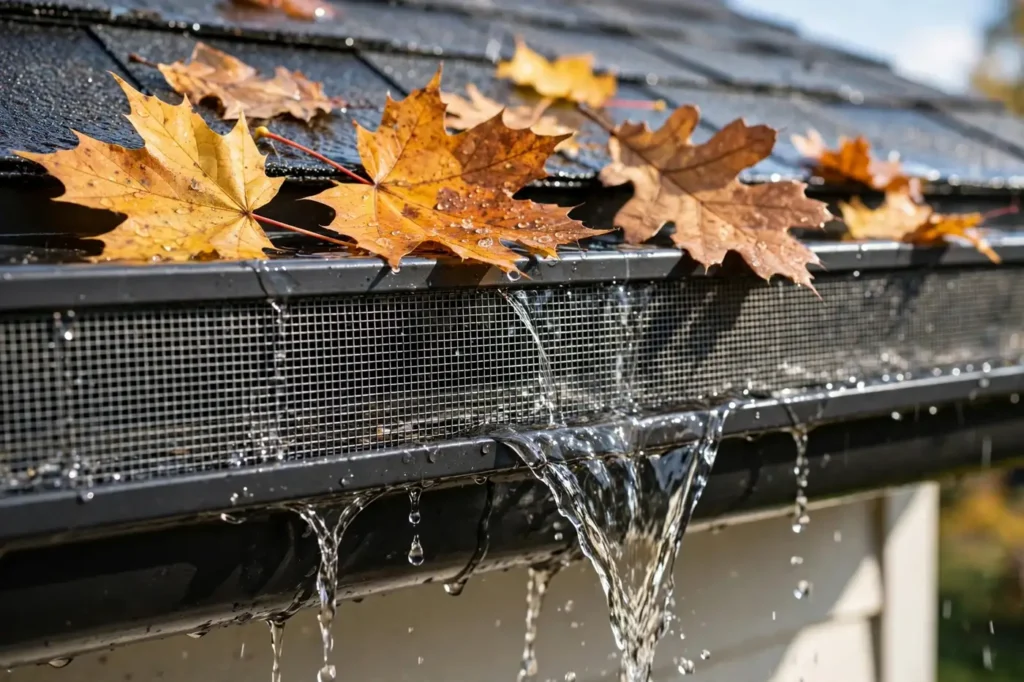
Not all gutter guards work the same way, and the wrong product on the wrong roof can cause more overflow than it prevents. Our crews assess your roof pitch, shingle type and debris load first, then fit the right system - micro-mesh, screen, reverse curve or foam inserts - with the edges sealed and secured so wind, birds and squirrels cannot get underneath.
What Our Gutter Guard Service Includes
Roof and gutter assessment
We inspect your existing gutters for pitch, damage and capacity before recommending a guard. Guards cannot fix a sagging or undersized system, so if a run needs repair or re-pitching first, we tell you and handle it as part of the job.
Cleaning before installation
Guards are never installed over a dirty gutter. We clean out the full system, flush the downspouts and confirm everything drains before the first panel goes on, so your protected system starts from a clean slate.
Guard fitting and securing
We cut and fit panels to your exact gutter lengths, secure them so they stay put in high wind, and seal the ends where debris and pests usually find their way in. On shingle roofs, we use fitting methods that protect your shingles and keep the roof warranty intact.
Water testing
Rain performance is the whole point, so we run water over the fitted system to check how it handles flow at valleys and corners, where cheap guards tend to let water shoot straight over the edge.
A note on valleys and inside corners
Most guard failures happen in the same two places: roof valleys, where two slopes pour water into one spot, and inside corners, where debris collects against the flow. Our crews pay special attention to both. At valleys we fit diverters or larger intake sections so fast-moving water slows and enters the gutter instead of overshooting it. At inside corners we shape panels to shed leaves rather than trap them. These details are invisible from the street, but they are the difference between a guard system that performs in a real storm and one that only performs on a dry day. When we water-test your installation, these are the first places we check - and the first places we will show you.
Signs Your Home Needs Gutter Guards
- You clean your gutters more than twice a year, or pay someone else to
- Leaves, pine needles or seed pods pile up in the runs every season
- Water spills over the edges during storms even right after a cleaning
- Plants sprout in your gutters, or birds and insects nest in the debris
- Ladder work around your home has become risky or impractical
- Ice builds up in clogged, waterlogged gutters during winter
How Our Gutter Guard Installation Works
- Call and assessment. You describe your home, your trees and how often your gutters clog. We schedule a visit to look at the roof and gutters in person.
- System selection. We show you the guard types that suit your roof and debris, explain the honest trade-offs of each, and confirm your choice before we order materials.
- Clean and prepare. On installation day, we clean the gutters, flush the downspouts, and make any small repairs or pitch corrections the system needs.
- Fit, secure and test. We install the guards, seal the ends, run a water test over the roof edge, and walk you through what was fitted and how it works.
Types of Gutter Guards We Install
Micro-mesh guards use a fine stainless steel mesh over a sturdy frame. They block almost everything, including pine needles and shingle grit, while letting water pass through. They are our most recommended option for homes under heavy tree cover. Screen guards are the classic perforated panels - a solid, economical step up from open gutters that keeps out leaves and larger debris. Reverse curve guards use surface tension to guide water around a curved nose into the gutter while leaves slide off the edge; they suit homes where a low-profile, solid look matters. Foam inserts sit inside the gutter and let water filter through while debris stays on top to dry and blow away. Each type has a roof it suits best, and part of our job is making sure you get that match instead of a one-size product.
Questions about your gutters? Talk to our team now.
Problems Gutter Guards Help Prevent
Clogged gutters are not just an eyesore - standing water and wet debris are where bigger problems start. Overflow from blocked runs soaks fascia boards until they rot, stains siding, and dumps water against the foundation, where it can work into basements and crawl spaces. Debris-filled gutters get heavy, and that weight pulls runs off their hangers and opens seams. In winter, clogged gutters feed ice dams that force water back under shingles. Guards also remove much of the standing water and sheltered debris that mosquitoes, wasps and nesting pests look for. And by cutting how often anyone needs to climb to your roofline, guards remove one of the most common causes of household falls.
Gutter Guards Installed in All 50 States
Leaf season in New England, pine straw in the Carolinas, oak tassels in Texas, cottonwood fluff in the Midwest - every region drops something different into gutters, and our crews fit guard systems for the debris your trees actually produce. Find your city on our Service Areas page to confirm coverage where you live, then call us to schedule your assessment.
How Gutter Guards Perform Under Different Trees and Roofs
Not every yard drops the same debris, and not every roof sheds water the same way, so we match guard style to both. Pine needles are the great test: they are thin enough to slip through wide openings, which is why homes under pines do best with fine mesh that stops needles while still drinking in rain. Oak tassels and maple seeds, the spring helicopters, clog screens in a single season if the openings are too coarse. On steep roofs and metal roofs, water arrives at the gutter faster and can overshoot guards with a flat profile, so angled designs that slow and capture the flow matter there. Valleys concentrate everything, water and debris alike, and we pay special attention to how a guard handles the extra volume at those points. Shingle grit is another quiet factor on older roofs: a fine surface keeps grit from building up inside the channel. When we look at your home, we study the trees overhanging your roofline, the pitch of your roof and the valleys that feed each run.
The right guard is the one chosen for your exact mix, not a single product pushed on every house.
Storm intensity matters as much as debris type - the rainfall totals published by the National Weather Service for your area are part of what our crews plan around.
Frequently Asked Questions
Do gutter guards mean I never have to clean again?
Quality guards reduce cleaning dramatically, but no honest installer promises a maintenance-free gutter forever. Fine debris can settle on top of some guard types, and corners and valleys may need an occasional brush-off. What changes is the scale: instead of digging out packed, wet debris several times a year, most homeowners need only a light surface check now and then, and the gutters themselves stay flowing between visits.
Will gutter guards work in heavy rain?
Yes, when the right system is matched to the roof. Problems in downpours usually come from undersized guards on steep roofs or at valleys, where water arrives fast and concentrated. Our crews size guard panels for your roof pitch and add valley solutions where two roof planes meet, then water-test the finished installation so you can see it handling flow before we leave.
Can guards be fitted to my existing gutters?
In most cases, yes. If your current gutters are sound, correctly pitched and large enough for your roof, we clean them, make small corrections if needed, and fit the guards on top. If the gutters are rusted, sagging or too small, we will say so and explain your options - fitting guards over a failing system would waste your money, and we would rather tell you first.
Which gutter guard type is best for pine needles?
Pine needles defeat most basic screens because they slip through the holes lengthwise and mat inside the gutter. Micro-mesh guards are the strongest answer for pine country: the mesh openings are fine enough that needles rest on top, dry out and blow off instead of entering the run. For homes under tall pines, micro-mesh is what our crews recommend most often.
Do gutter guards affect my roof or shingles?
Fitted correctly, no. We use installation methods that work with your shingles rather than lifting or fastening through them in ways that cause leaks, and we keep the roof manufacturer's guidance in mind on every job. The guard attaches to the gutter and fascia system, sheds its debris load to the ground, and leaves your roof surface exactly as we found it.
Will I ever need to clean my gutters again with guards on?
Guards cut the work dramatically, but no honest company will promise you a gutter that never needs a glance. Most homes with well-matched guards need only an occasional check, and many homeowners have surface debris brushed off during a routine visit rather than a full clean-out. The real change is what happens between visits: water keeps flowing instead of backing up, because the channel stays open. We will tell you plainly what to expect under your trees, and our maintenance plans can fold that check into scheduled care.
Related Gutter Services
Gutter Installation - new seamless systems, guard-ready
Gutter Screens and Covers - compare screen and cover options
Gutter Cleaning - the clean slate every guard install starts with
Gutter Maintenance Plans - scheduled care for protected systems
End the Ladder Routine for Good
Your gutters should be the part of your home you never think about - not a chore that comes back every season. With the right guards, fitted properly and tested before we leave, the leaves stay out, the water flows, and the ladder stays in the garage. Talk to our team about the best guard system for your roof today: Call (855) 779-9806